Blue Christmas Tree Ideas: Your Simple Starting Plan
Before you buy another ornament, take a few minutes to plan your tree. These five decisions can save time, money and plenty of second-guessing.
- Choose your colors. Start with one main shade of blue, one light neutral such as ivory or white, and one optional metallic accent.
- Check what you own. Keep your existing tree, working lights and decorations that suit your chosen palette.
- Identify what's missing. You might need a few navy ornaments, a beautiful ribbon or nothing at all.
- Decorate in layers. Prepare the tree and lights, add ribbon or garland if you're using them, position larger ornaments, then fill gaps with smaller decorations.
- Step back before adding more. Add any optional finishing touches, then check the balance. A tree doesn't need every branch covered to look beautiful.
With those decisions made, you're ready to follow the full decorating guide below.
Why Blue Coastal Christmas Works
Blue can make a Christmas tree feel festive while sitting comfortably with the rest of a room. A limited palette and thoughtful placement help create a balanced focal point.
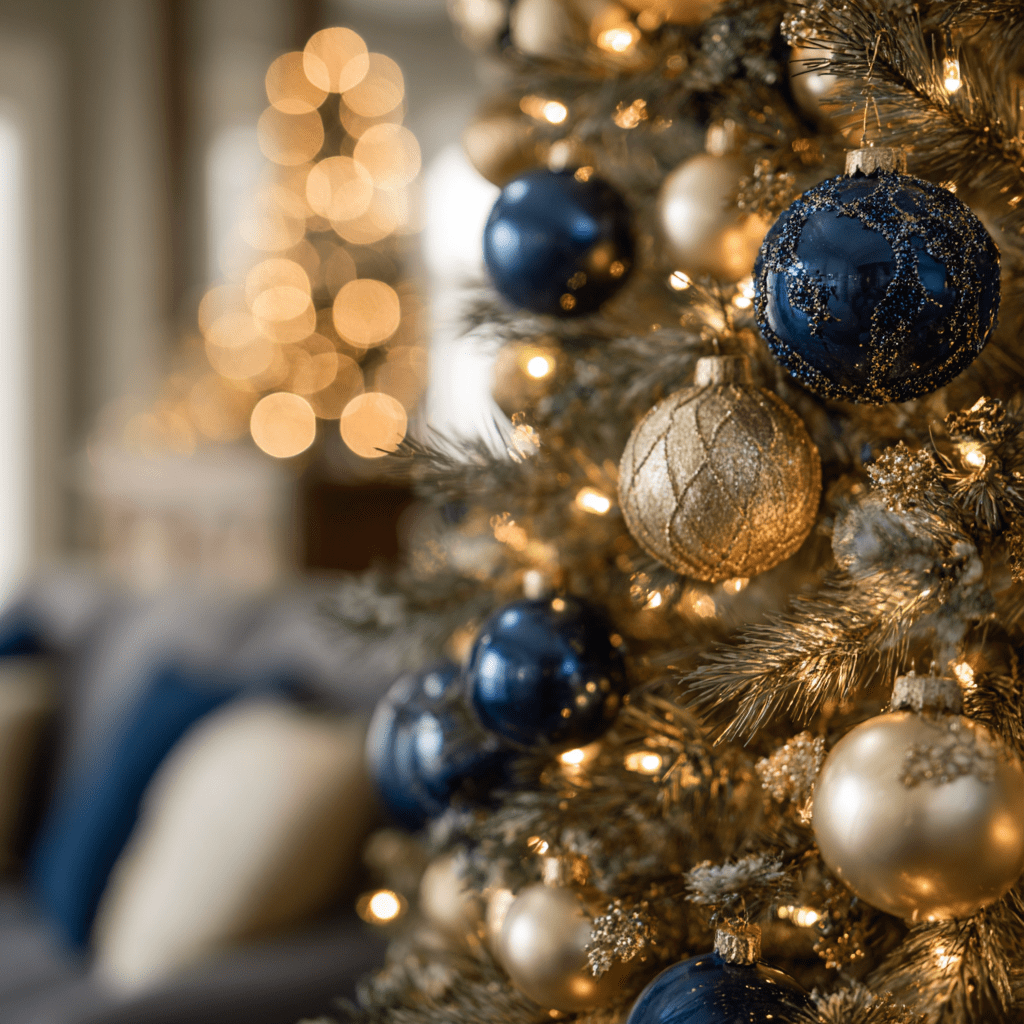
Navy, muted blue, ivory and soft white create a relaxed modern coastal palette. Champagne gold or subtle silver finishes can add warmth or a little sparkle.
These colors work well with natural woods, woven textures and metallics you may already have. Coastal character can come from color and materials alone, without shells or nautical decorations.
What You’ll Need
Start with your existing decorations and check what suits your chosen palette before buying anything new. A few thoughtful additions can be enough.
Start with what you have:
- Your existing Christmas tree
- Working Christmas lights
- Blue, white, ivory, silver or suitable metallic ornaments
- An existing tree topper and tree skirt, if they fit your chosen look
Optional additions:
- A few larger blue statement ornaments
- Navy velvet or linen ribbon
- Additional coordinating ornaments to fill noticeable gaps
- A simple woven or fabric tree collar
- One or two meaningful coastal accents, if desired
Any quantities mentioned below are rough starting points, not fixed rules. They estimate a particular decorating density for a 7-foot tree, not a shopping requirement. Use what you own and adjust to your tree’s height, fullness and the amount of open space you prefer.
1. Choose Your Blue Color Palette

Choose one dominant blue, one light neutral such as ivory or white, and an optional coordinating accent. Look at your existing pillows, art and decorations, then echo those blues so the tree feels connected to the room.
- Classic Navy and White. A timeless combination that works beautifully with an existing collection of white or silver ornaments. Navy provides depth while white keeps the tree looking fresh. Add a little silver for sparkle if you already have it.
- Navy, Ivory and Champagne Gold. Rich navy ornaments, soft ivory and warm champagne gold create an elegant, inviting Christmas tree. Use gold sparingly to catch the light rather than overpowering the blue.
- Dusty Blue, Ivory and Natural Wood. For a softer modern coastal look, pair muted or dusty blue decorations with ivory, natural wood and subtle linen textures. The result feels relaxed and refined without relying on obvious nautical ornaments.
- Layered Blues and Ivory. Mix deep navy with slate or soft powder blue, using ivory as the balancing color. Vary the ornament sizes and finishes to create depth without making the tree look overly busy.
2. Gather Your Decorations
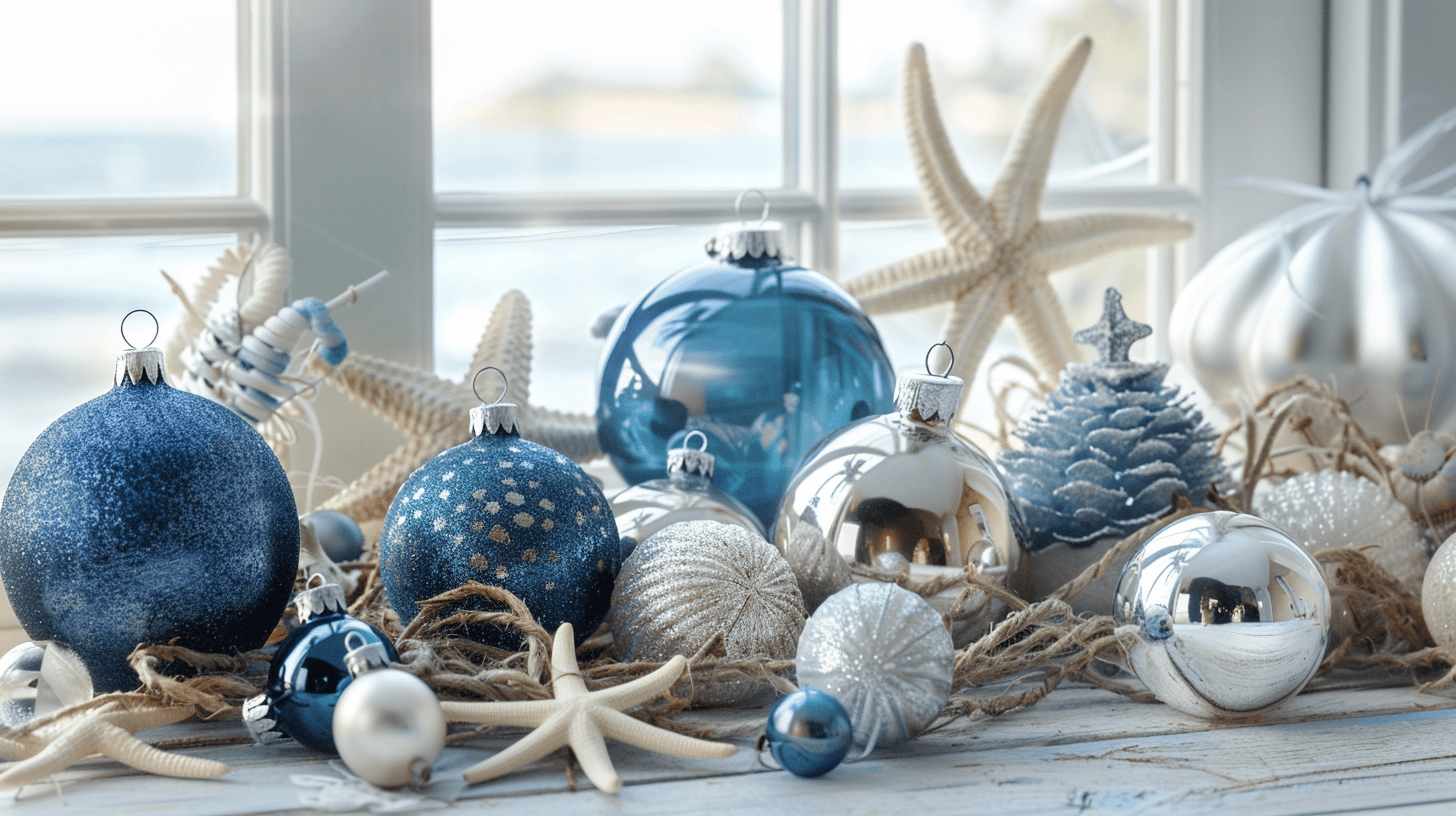
Before you start decorating, gather the decorations you already own so you can see your full collection and identify any genuine gaps.
Blue and Coastal Christmas Ornaments
For a fairly full decorating style, a 7-foot tree might use around 80-100 ornaments. This is an approximate density estimate, not a required purchase, and an airier tree can use fewer. Work with a mix of sizes: large statement ornaments (3-4 inches), medium ornaments (2-3 inches), and small accents (1-2 inches). Blue and white ornaments in matte and glossy finishes, beautiful glass pieces and subtle metallics bring variety. If you enjoy traditional beach motifs, a few sand dollars, starfish or glass floats can be optional personal touches rather than the basis of the whole tree.
Ribbon and Garland
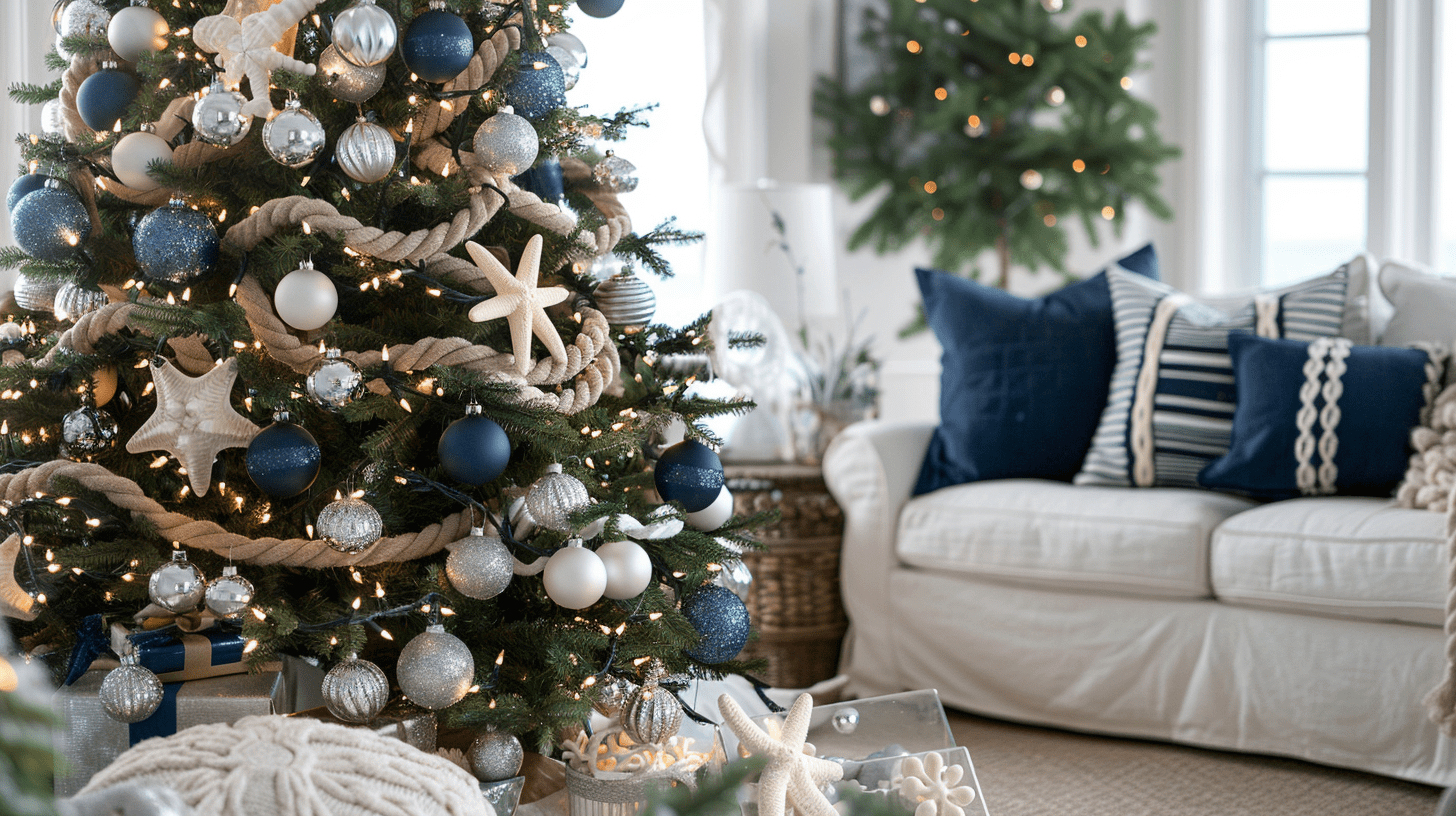
If you choose the cascading ribbon technique, around 15-20 feet is a rough starting point for a 7-foot tree, depending on how much ribbon you want to show. Use an existing ribbon if it fits the palette. Navy velvet or linen adds soft texture; natural jute rope is an optional alternative for a more nautical look.
Garland is optional. White wood beads or a little faux eucalyptus in silvery-green tones can add natural texture. Nautical rope also works if you enjoy that style, but color and texture alone can give the tree a coastal feel.
Lights First
As a rough starting point, a 7-foot tree might take 600-800 white LED lights; fuller trees or denser lighting may need more. Warm white creates a cozy glow, while cool white feels more contemporary. If you’re feeling adventurous, blue string lights can create a stunning moonlit effect, though they work best as a secondary layer over white lights.
Tree Topper
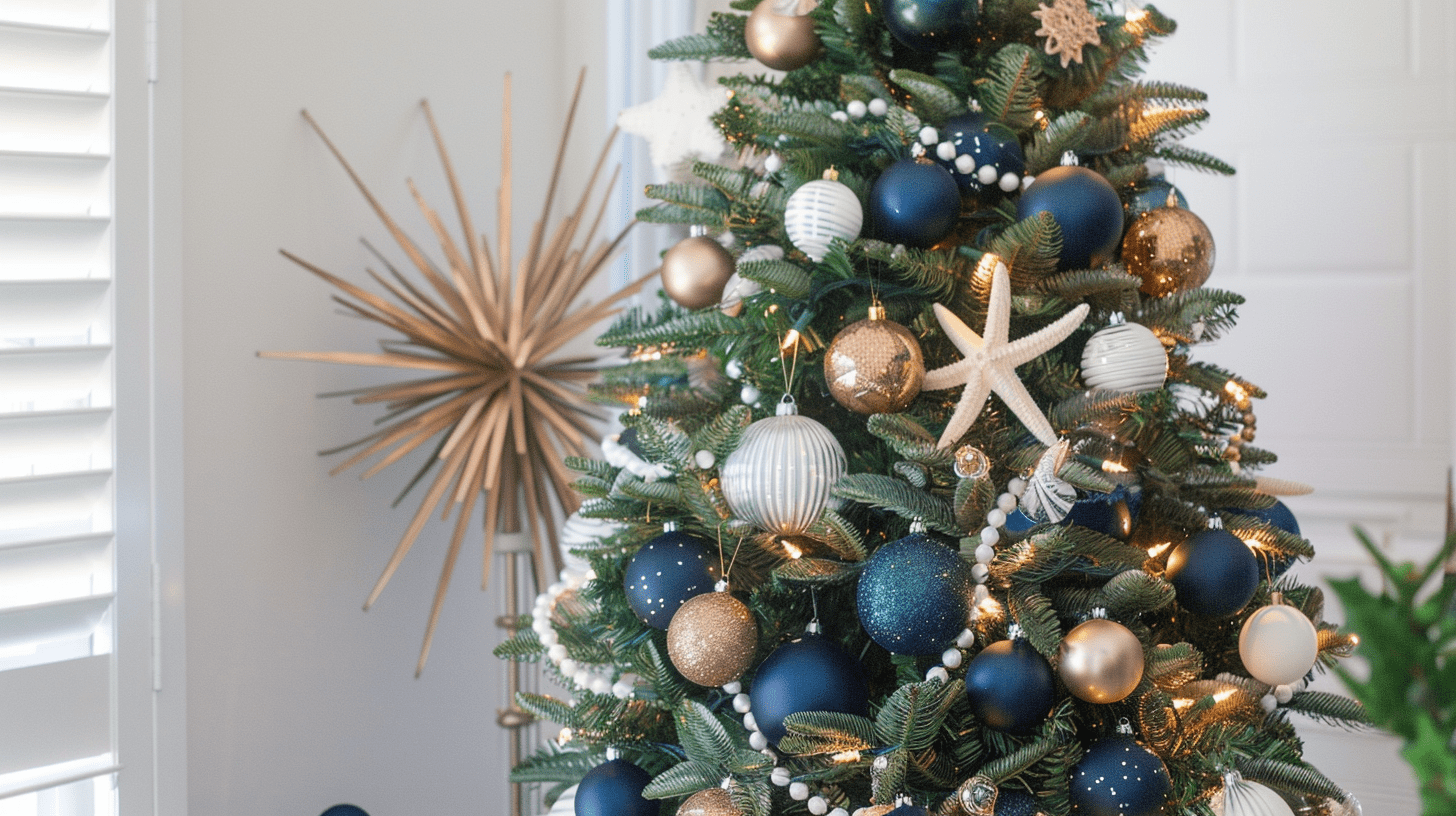
Keep an existing topper if it suits your palette. A simple white or silver star can finish a modern coastal tree; a starfish or driftwood star is an optional choice for readers who prefer a more beach-themed look.
Tree Skirt or Collar
A white faux fur tree skirt brings snowy texture, while navy velvet feels luxe. Natural woven baskets, galvanized metal buckets, or jute tree collars offer a more casual coastal vibe.
3. String Your Lights
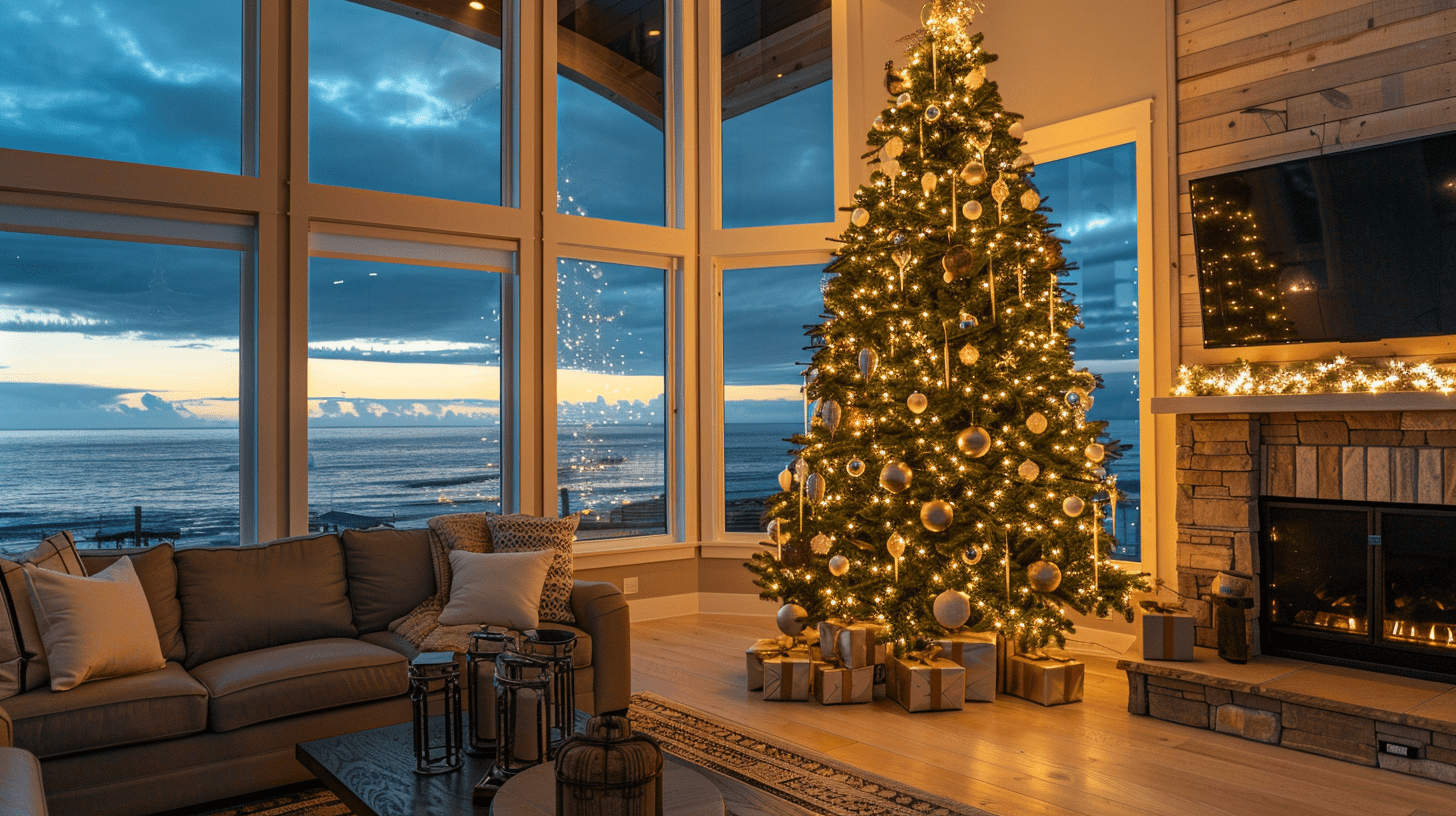
Always light your tree first, before adding any ornaments. Start at the base of the tree near the trunk and work your way around and outward, pushing lights slightly into the branches for depth rather than wrapping them around the outside. A common rule of thumb is around 100 lights per vertical foot of tree, though the right amount depends on how full your tree is and how bright you want it to look. Generous lighting makes blue and glass ornaments sparkle and gives the tree a warm, layered glow.
If you’re layering blue lights with white, add the white strand first as your base layer, then weave blue lights more sparingly through the outer branches for pops of color.
4. Add Ribbon and Garland
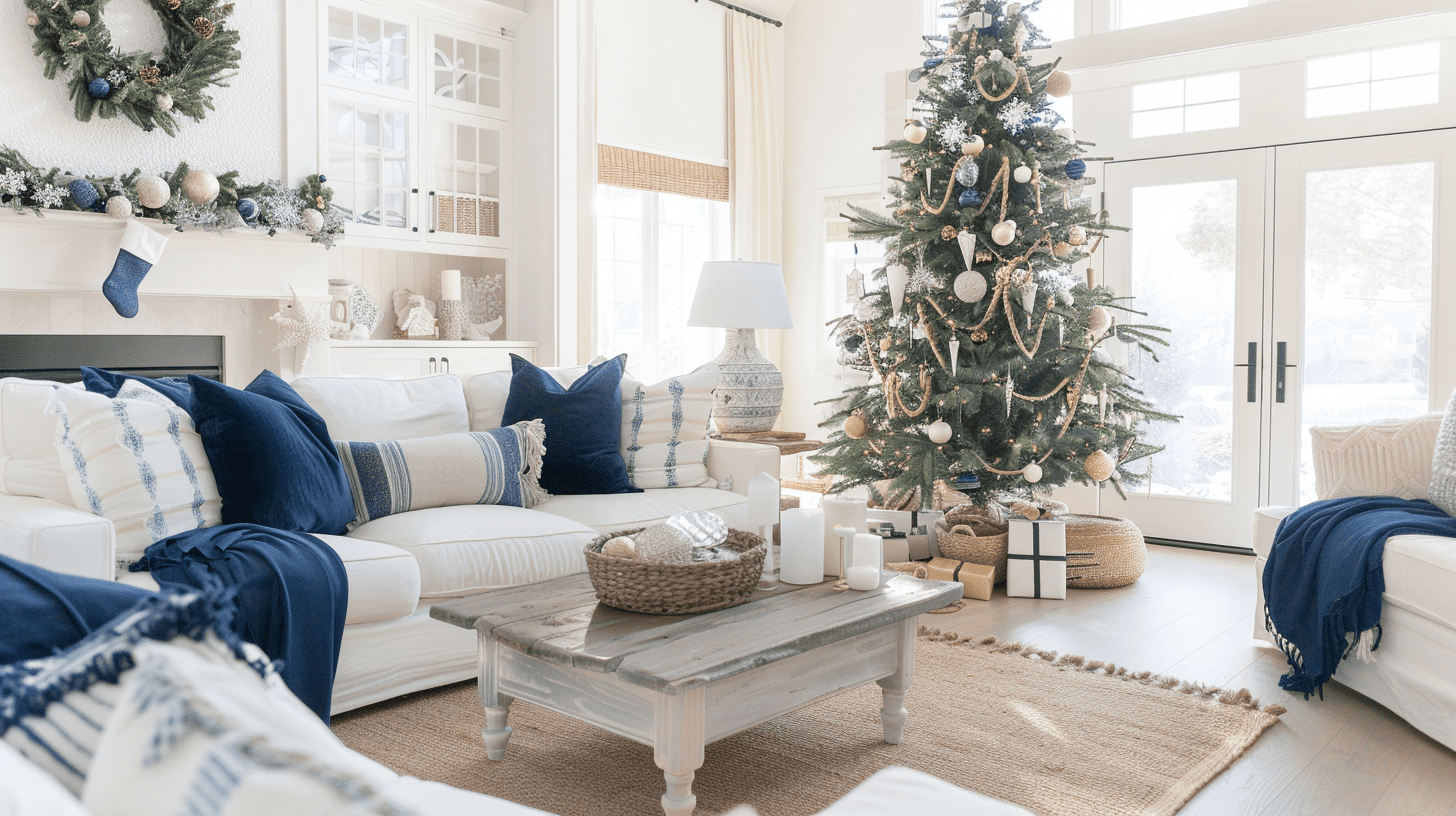
This step is optional but adds texture and movement to the tree. For a coastal tree, skip stiff wired ribbon and choose materials with movement and texture.
Cascading Ribbon Method
Cut 18-24 inch sections of ribbon and tuck them vertically into the tree, letting them cascade down naturally. Start near the trunk and work outward, spacing ribbons evenly around the tree. This creates elegant flow without looking too structured.
Garland Draping
If using bead garland or rope, drape it loosely in a spiral from top to bottom. Let it fall naturally between branches rather than pulling it tight. White wood beads add a simple natural texture; jute or nautical rope is an optional alternative if you prefer a more beach-themed finish.
5. Layer Your Ornaments for Balance
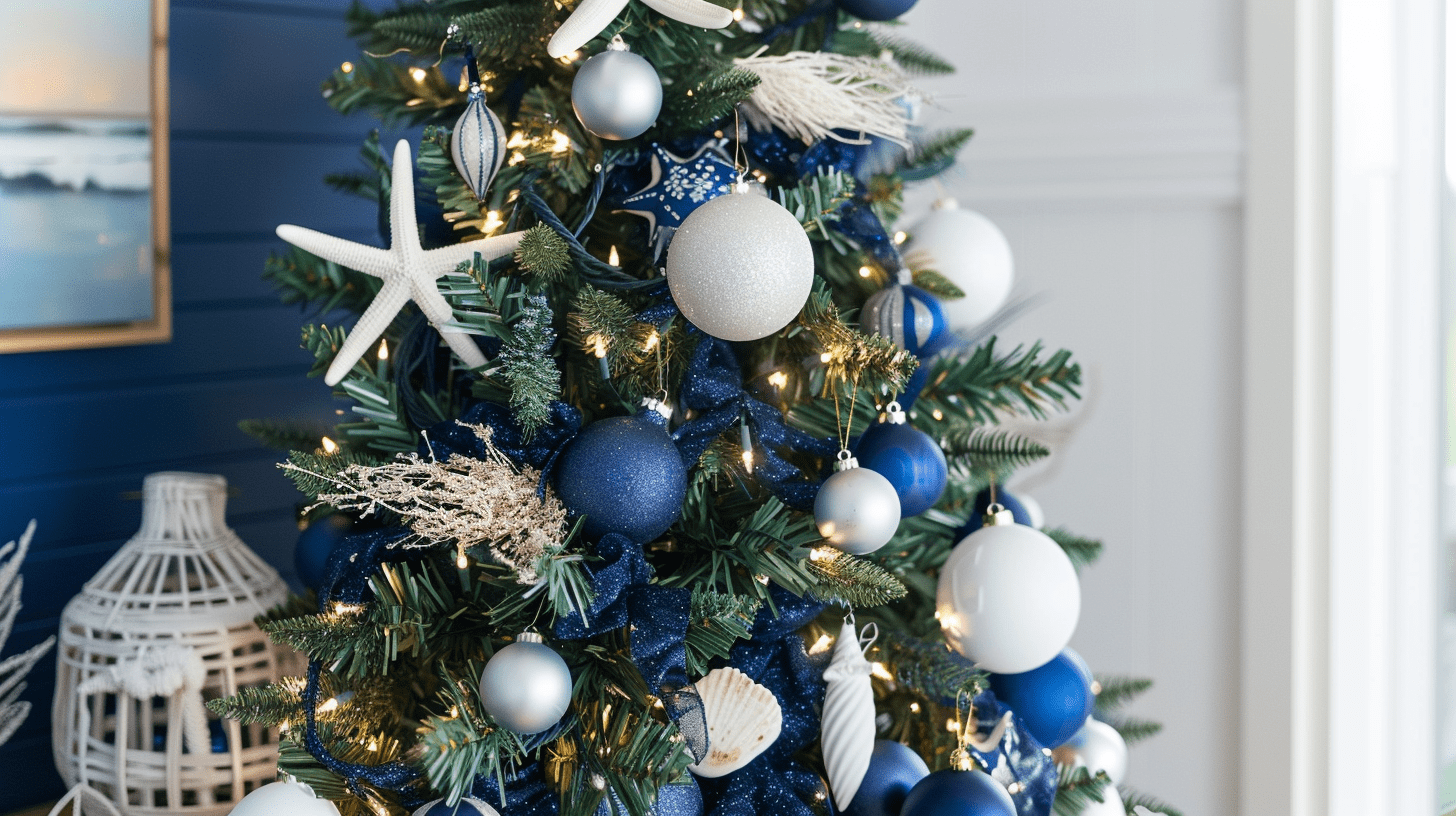
This is where your tree truly comes to life, and the order matters.
Start with Large Ornaments
Place your biggest ornaments (3-4 inches) first, spacing them evenly around the tree in a triangle pattern: some high, some middle, some low. This creates visual balance. Push them slightly into the tree rather than hanging them on the tips of branches for depth.
Fill with Medium Ornaments
Your 2-3 inch ornaments are workhorses. Use these to fill the visual gaps between your large pieces. Alternate colors as you go: if you placed a navy ornament, flank it with white or silver.
Add Small Accent Pieces
The smallest ornaments (1-2 inches) add detail and fill selected gaps. Small glass or metallic pieces work well. Tiny starfish, mini glass floats or shells can be optional personal accents if you enjoy them; leave some open space rather than filling every branch.
Vary Ornament Depths
Some ornaments should sit deep in the tree, some midway out, and some near the branch tips. This creates dimension and makes your tree look fuller.
Mix Textures and Finishes
Combine matte navy balls with glossy white ones, add glittered pieces for sparkle, incorporate mercury glass for vintage coastal charm, and include natural elements like wood or shells for organic texture. This variety keeps the eye moving and prevents the tree from looking flat or one-note.
6. Add Texture for a Modern Coastal Feel
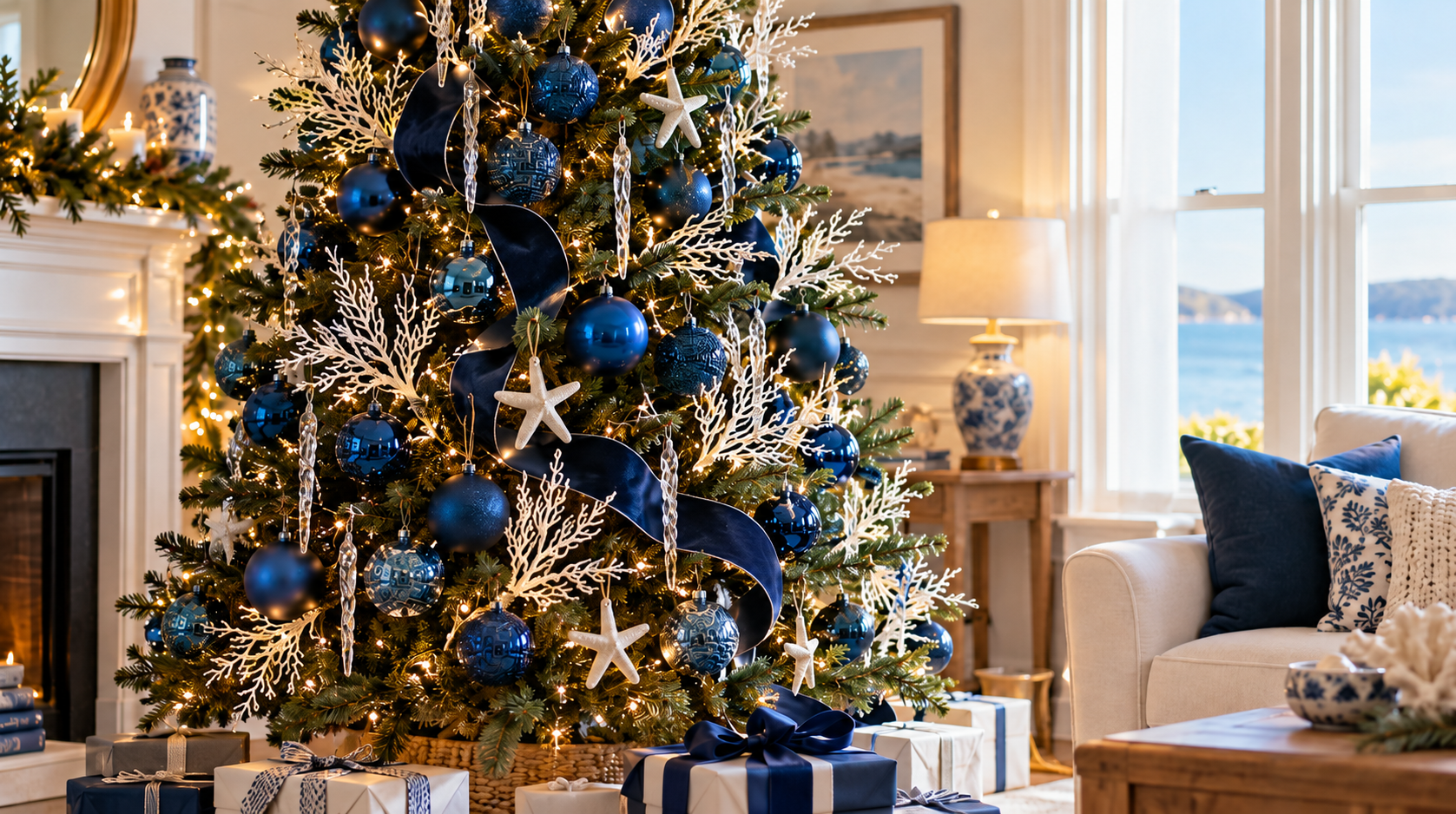
The beauty of this modern coastal Christmas tree is in the contrast and texture. Matte, glossy and patterned navy ornaments add depth, while soft velvet ribbon, delicate white branches and clear glass icicles catch the warm glow of the lights. A few white starfish provide a subtle coastal touch without overwhelming the design.
Natural Textures
Velvet or linen ribbon, wood beads and a woven tree collar can soften glass ornaments and subtle metallic finishes. If you already own driftwood, white coral branches or starfish decorations, use one or two as optional accents rather than adding a full collection.
Optional Nautical Touches
For readers who enjoy traditional nautical decorations, a few rope knots, wooden boats, compass ornaments or anchors can add a personal touch. They are not necessary for a modern coastal tree; keep them secondary to the color palette and natural textures.
Glass and Subtle Finishes
Glass ornaments and icicles reflect the lights without adding much visual weight. Pair them with matte navy, frosted white or ivory ornaments and subtle champagne gold finishes. Capiz shell ornaments are another optional way to add a light-catching texture.
7. Style Your Tree Topper

Choose a topper that fits the palette and scale of your tree, including one you already own.
An oversized silver or white star keeps the finish simple and fits a modern coastal palette. A driftwood star can add natural texture. A white starfish is an optional alternative if you prefer a more traditional beach-themed tree.
For something unexpected, try a small arrangement of white branches in a decorative vase secured to the top, or even a gathered bunch of eucalyptus tied with navy ribbon. Some decorators skip the topper entirely and let the tree’s natural shape shine through.
8. Choose Your Tree Skirt
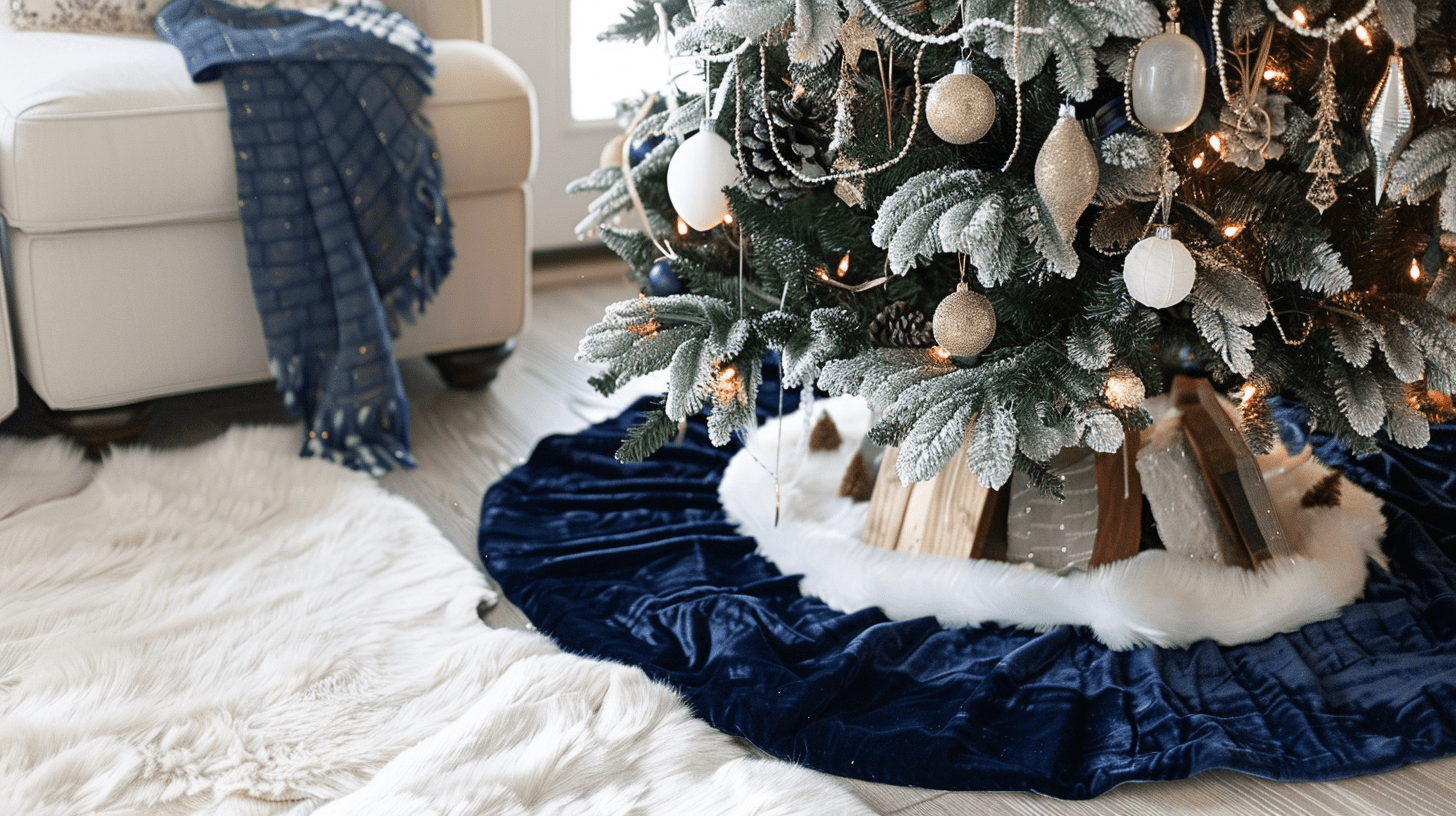
The tree base grounds your entire design and shouldn’t be an afterthought when creating coastal Christmas decorations.
White Faux Fur
Creates a snowy, winter wonderland effect and contrasts beautifully with navy ornaments. The texture adds softness.
Blue Velvet
Brings richness and sophistication, especially stunning under a tree heavy on white and silver.
Natural Jute or Burlap
Jute tree collars add natural texture and work well with a relaxed coastal style.
Woven Basket or Galvanized Bucket
For a farmhouse-coastal vibe, skip the skirt entirely and set your tree in a large woven basket or metal bucket. Add a few wrapped presents around the base to complete the look.
9. Evaluate and Adjust

Step back at least 10 feet and look at your tree with fresh eyes. Walk around it and view it from every angle.
Look for uneven clusters or distracting gaps, then move existing medium or small ornaments to balance them. Some visible branches are part of an uncluttered look, so only add more decorations where they genuinely help.
Check for color balance
Does one color dominate too heavily? If your tree looks too blue, add more white ornaments. If it’s reading too neutral, layer in more navy or teal.
Assess visual weight
Is everything clustered at eye level? Make sure you have ornaments distributed from top to bottom and front to back.
Turn off the overhead lights and evaluate your tree lighting. Does it glow evenly, or are there dark spots that need more lights?
10. Finishing Touches That Tie the Look Together
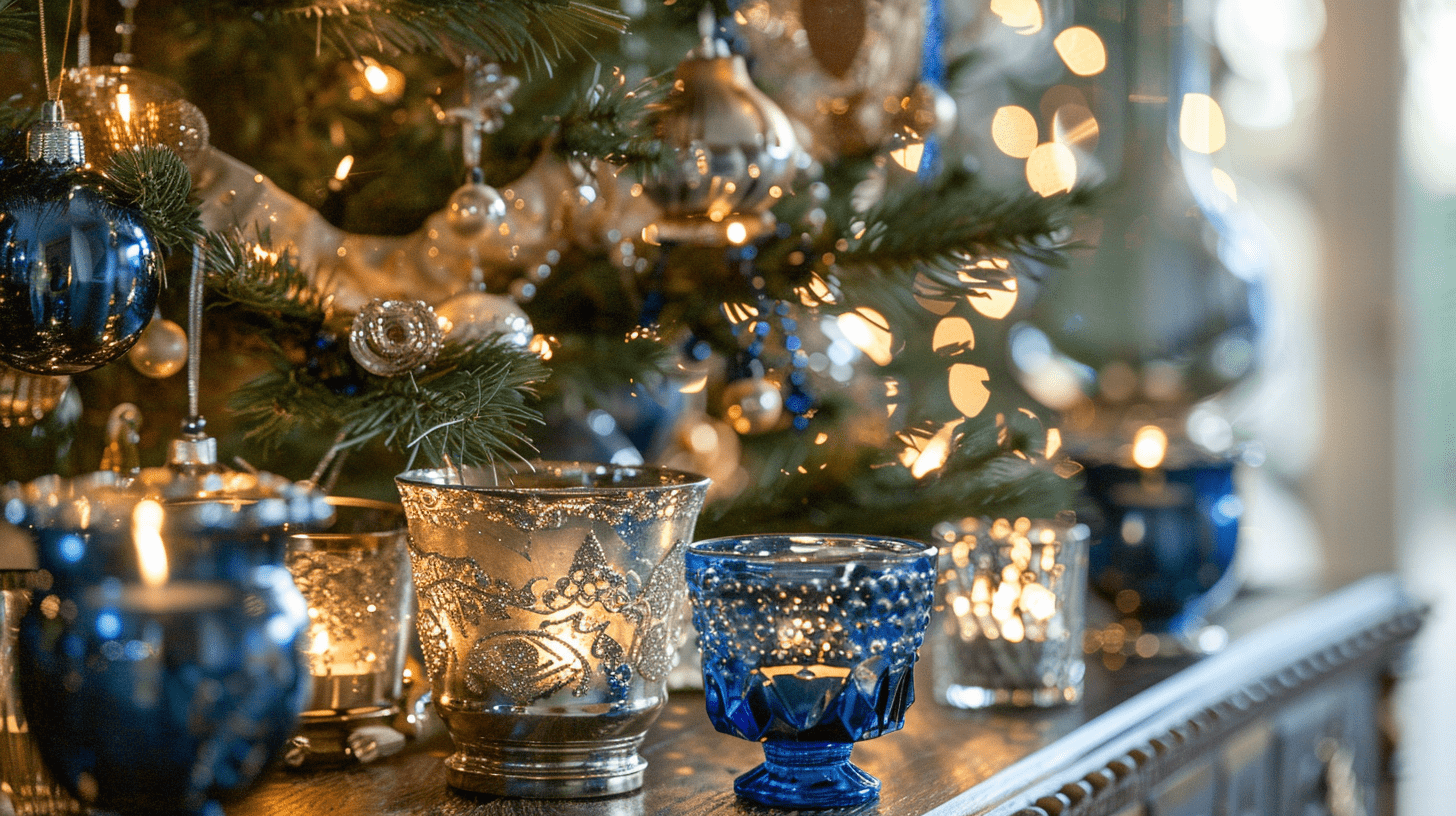
Finishing a Christmas tree is often about knowing when to stop. Before buying another decoration, step back and look at the tree from across the room.
Is the blue distributed evenly? Are there a few lighter ornaments catching the glow of the lights? Does the tree feel balanced without every branch being filled?
A few small adjustments may be all that's needed.
If you would like a little more texture, a few sprigs of faux blue eucalyptus or white berry branches can be tucked into the tree, and mercury glass candle holders or blue glass votive holders nearby can echo the ornaments. These are optional additions rather than essential purchases.
If you'd like the tree to feel connected to the room, repeat one or two of its colors in something you already own, such as a navy cushion, an ivory throw or an existing decorative accent. There's no need to decorate every surface.
Make It Yours
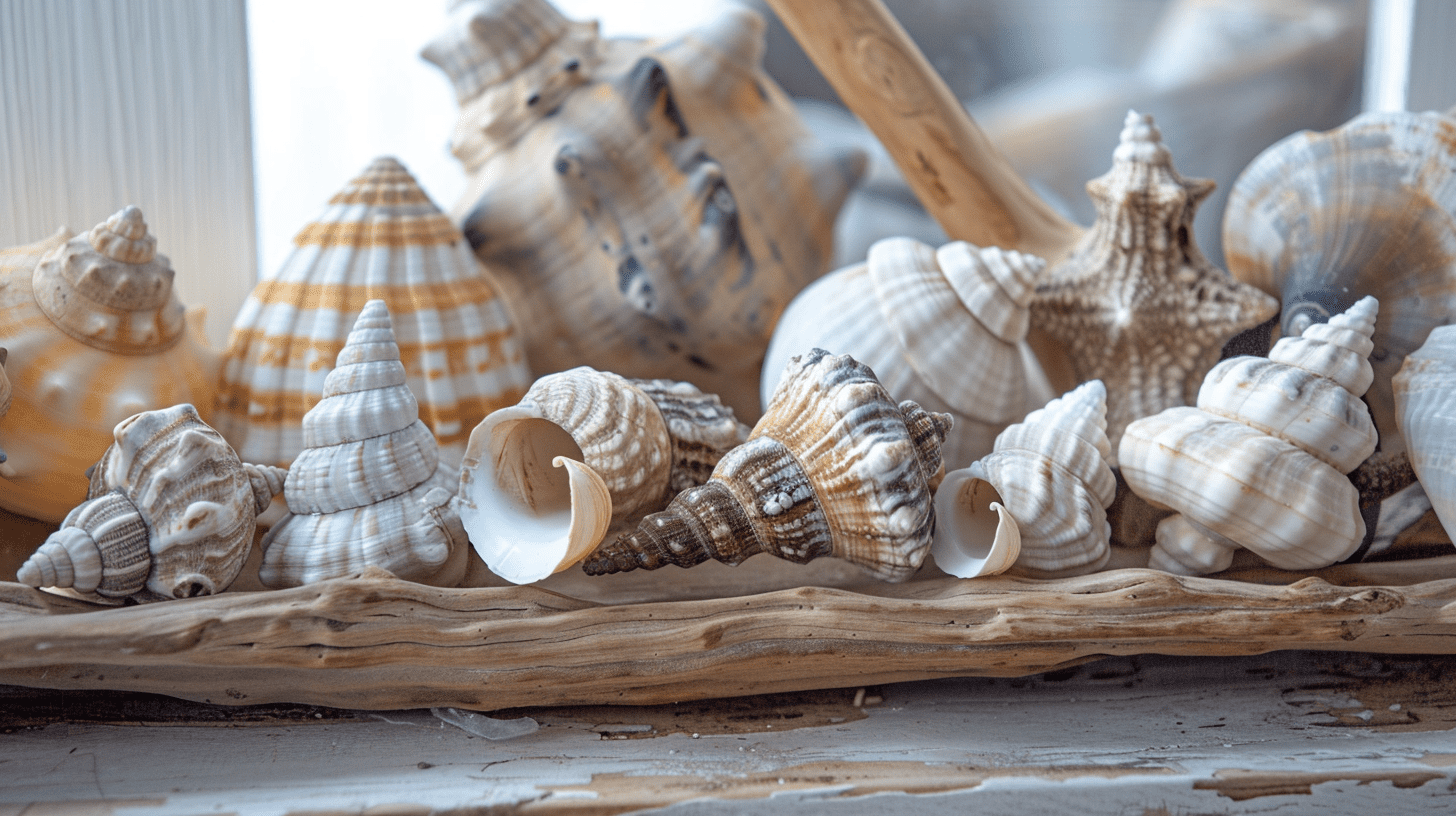
Keep meaningful ornaments that work with your chosen palette, whether they are family favorites, glass pieces or souvenirs from a beach trip. A cherished shell or piece of driftwood can be a small personal touch, but a coastal tree does not need nautical decorations.
The aim is a tree that feels balanced, relaxed and right for your home. Start with what you own, add only what helps and leave room for the colors and textures to stand out.
Save to Pinterest