1. Build the Color Palette Without Painting the Walls
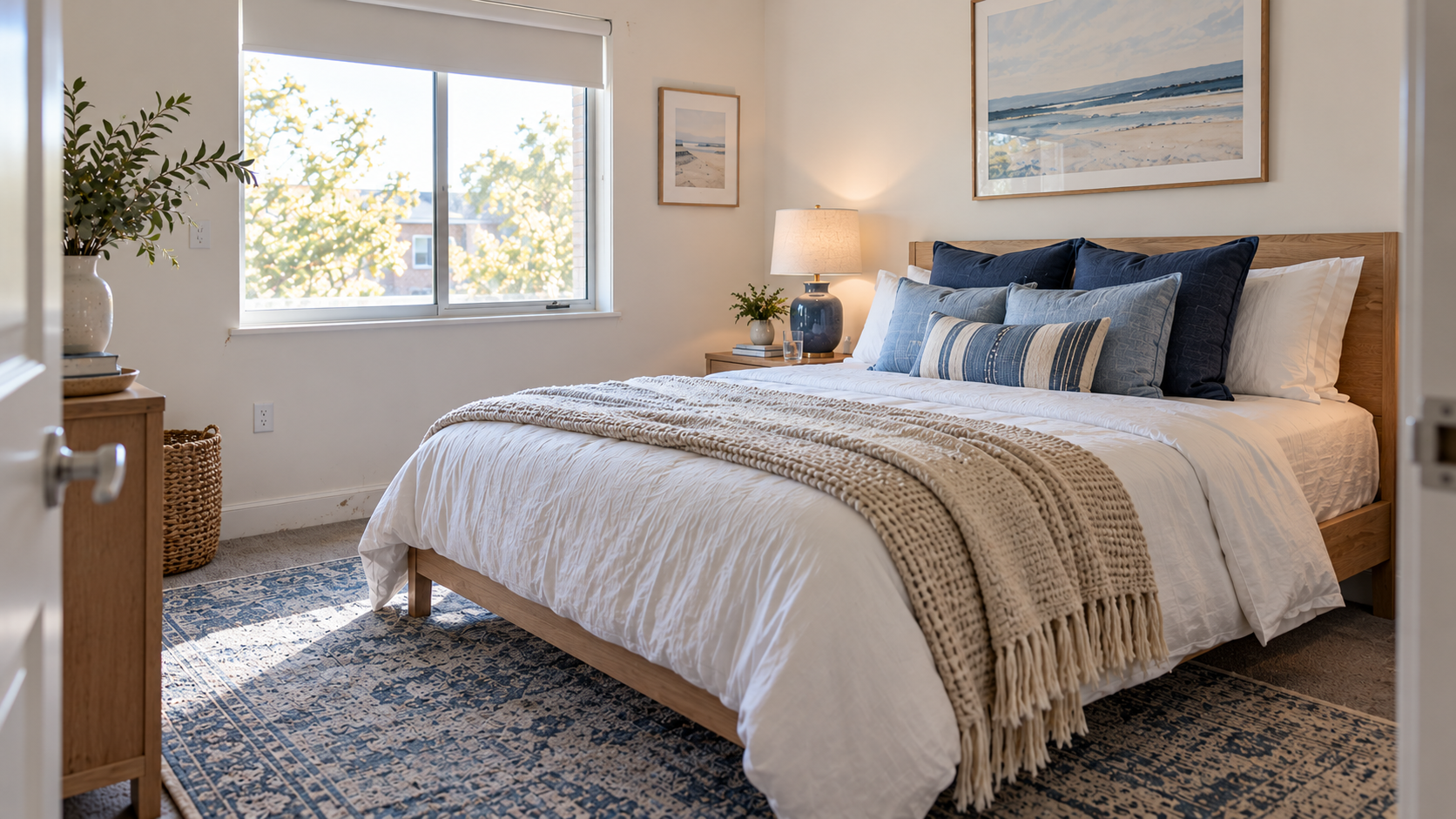
The easiest coastal bedroom color palette is blue, warm white and a natural neutral such as oatmeal, sand or pale wood. Navy gives the room depth, softer blues keep it lighter, and warm neutrals stop the scheme feeling cold. In a rental, bring those colors in through pieces you can move rather than paint.
Start with the bed because it occupies the biggest block of color in most bedrooms. White or warm-white bedding gives you a clean base. Add navy where you want stronger contrast, then use dusty blue, faded denim or grayish blue to soften the transition.
You do not need five different blues. Two is usually enough. If the walls are beige, cream or a landlord-standard off-white, work with them.
Warm wall colors often sit comfortably beside navy, oatmeal and natural timber once the textiles start tying the room together. This approach also means the palette survives the next move. A blue throw, lamp or pillow does not care what color the next landlord painted the walls.
2. Let the Bedding Do More of the Decorating
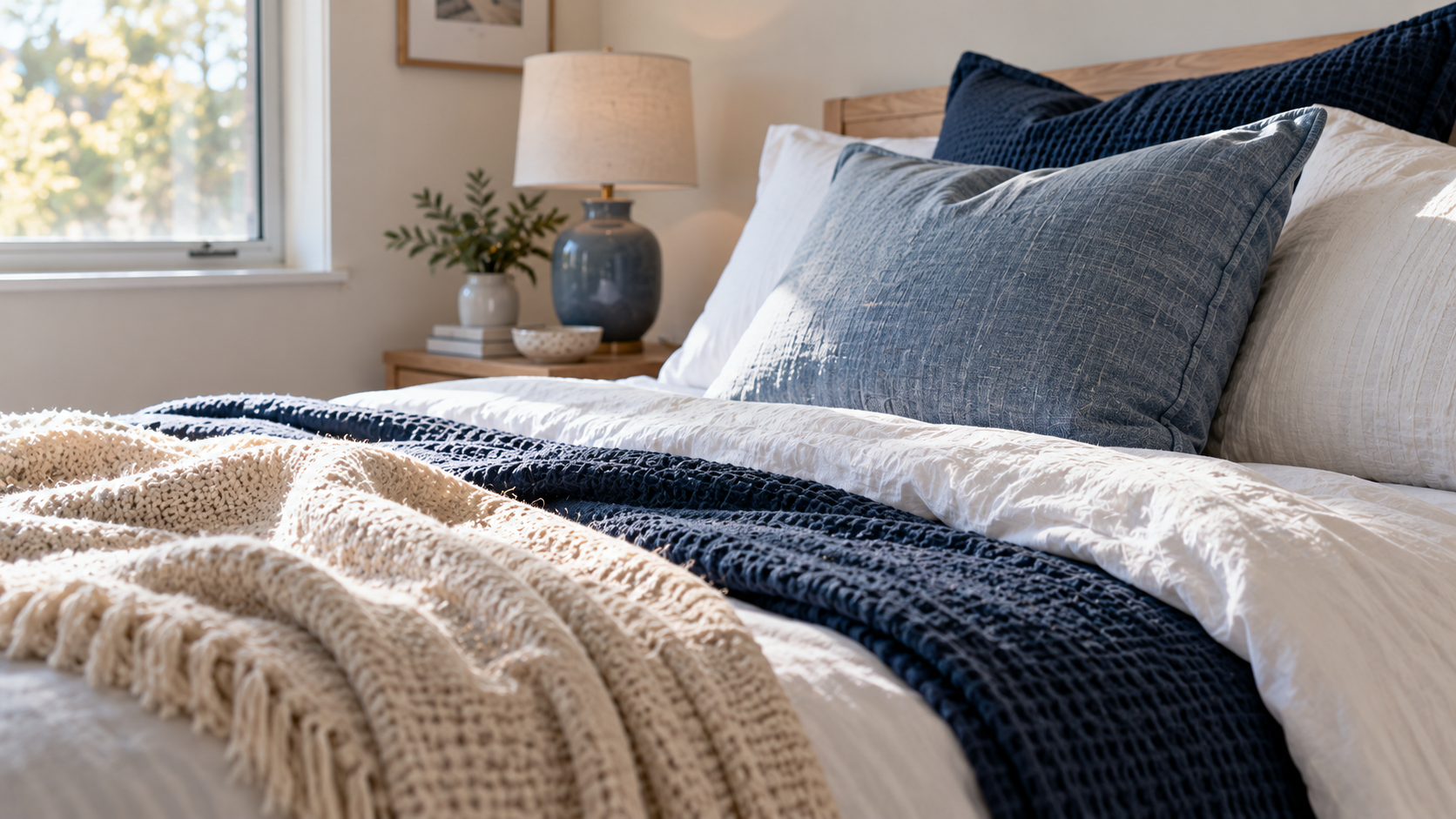
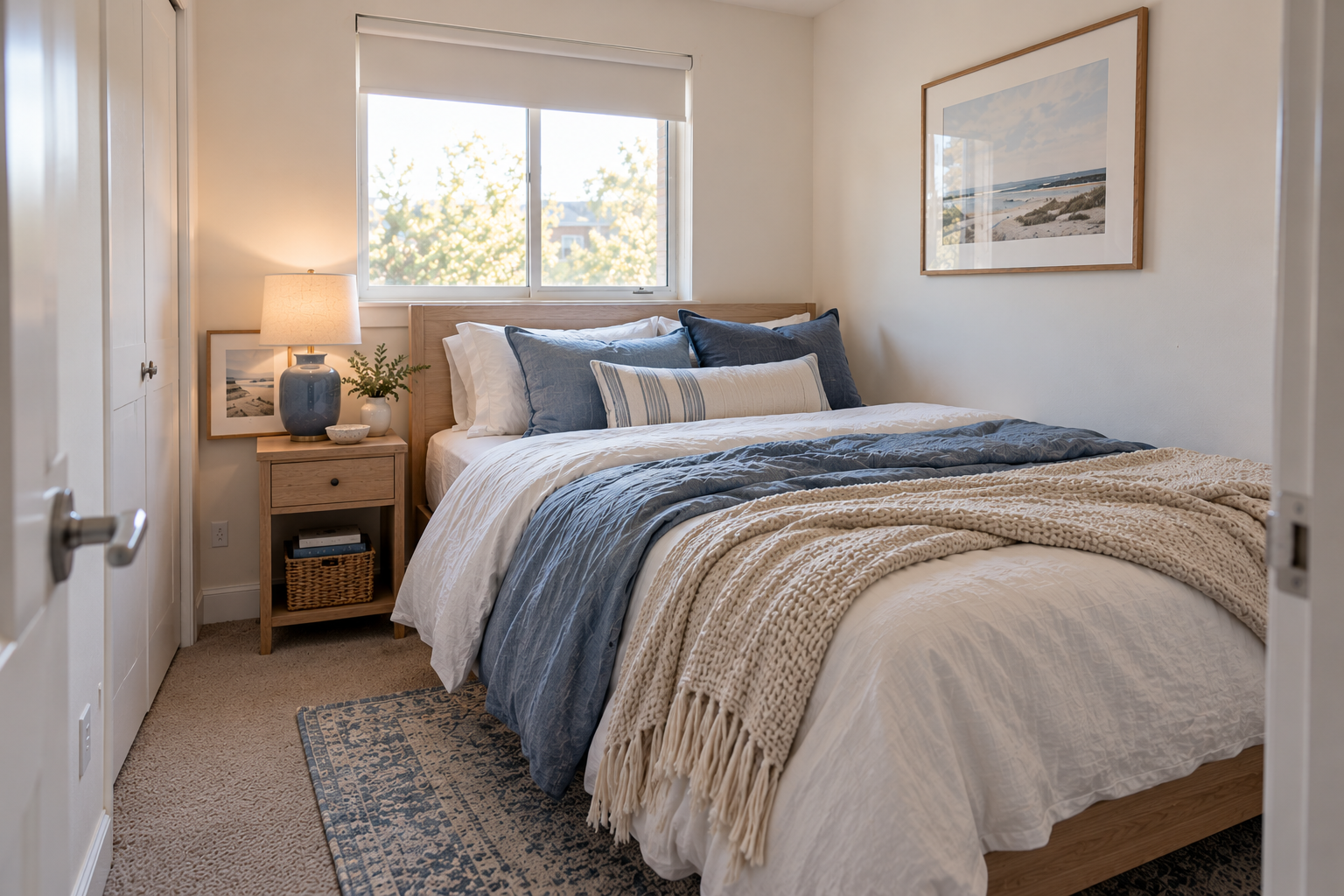
In a rental bedroom, bedding is one of the easiest places to make a noticeable change because it adds color, pattern and texture without requiring permission from anyone. Treat the bed as the main visual anchor rather than trying to decorate every wall. A white or soft neutral comforter with navy and dusty-blue layers can create most of the coastal feeling on its own.
If you prefer a blue comforter, keep some of the surrounding pieces lighter so the bed does not become one solid block of dark color. Texture matters here too. Cotton, linen-look fabrics, waffle weaves and quilted finishes give a plain rental bedroom more depth without adding another decorative motif.
If you are choosing bedding for a queen bed, the blue comforter sets for a queen bed guide compares several shades and styles that work well with a blue-led room. The useful test is simple: stand at the bedroom door. If the bed already establishes the color direction, you do not need to compensate with extra decor everywhere else.
3. Add Natural Texture Without Changing the Room
Coastal bedroom decor does not need a shell, anchor or beach sign to read as coastal. Texture can do that job more quietly.
Linen and cotton soften the bed.
Woven baskets add useful storage. Pale or medium-toned wood warms up blue and white. A little rattan or a woven shade can introduce another natural surface without taking over the room.
For renters, these materials have another advantage: they are portable. A basket can move from a bedroom to a hallway. A wooden bedside table can work with a different wall color later.
A linen throw can follow you from one bed to another. Keep this section of the room focused on materials rather than motifs. If you already have one recognizable coastal detail elsewhere, such as a rope-wrapped lamp or a piece of ocean photography, you do not need to repeat it in every object.
One strong reference is enough to make the point.
4. Make a Small Coastal Bedroom Feel Less Crowded
In a small coastal bedroom, fewer well-scaled pieces usually work better than filling every wall and corner. Keep useful floor space visible, choose furniture that earns its footprint, and let bedding, lighting and one rug carry more of the style instead of relying on lots of decorative objects. Start with the things the room actually needs.
A bed.
A practical bedside surface.
Lighting.
Storage.
Somewhere for everyday items to go.
Then be suspicious of everything else.
A bench at the foot of the bed may look good in a large styled room, but in a tight rental it can turn the main walkway into an obstacle course. The same goes for oversized nightstands, decorative chairs that collect clothes and storage pieces that are too deep for the room. Use height where it helps, but avoid making every wall busy.
A tall mirror can add useful vertical scale. One larger piece of art can be calmer than six small frames. Keeping part of the floor visible also makes the room easier to read at a glance.
Small-space coastal style works best when the room feels usable first.
5. Use a Freestanding or Frame-Attached Headboard Instead of an Accent Wall
Paint, wallpaper and wall paneling are common coastal-bedroom recommendations, but none of them is necessary to give the bed a focal point. A freestanding or frame-attached headboard can do the same visual job without becoming part of the building. Pale timber works particularly well with blue and white because it adds warmth without introducing another strong color.
Upholstered linen-look headboards are another option if you want the room to feel softer. The important part is scale. A headboard that is slightly wider than the mattress creates a clear frame around the bed.
An oversized design can make a small rental bedroom feel even tighter. Keep wall-mounted designs out of the equation if avoiding drilling is part of the goal. The headboard should make the bed look intentional, not create another installation project.
6. Choose Bedside Lighting Without Hardwiring Anything
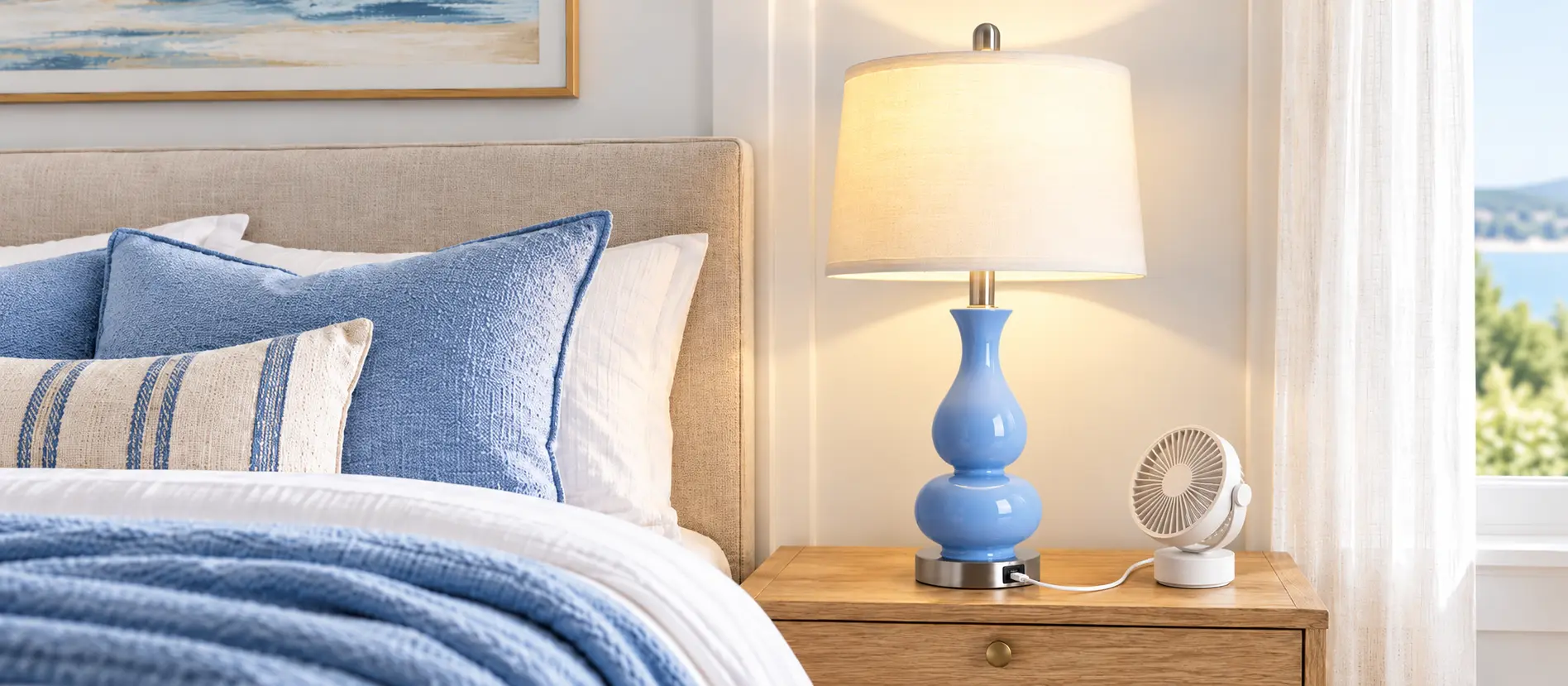
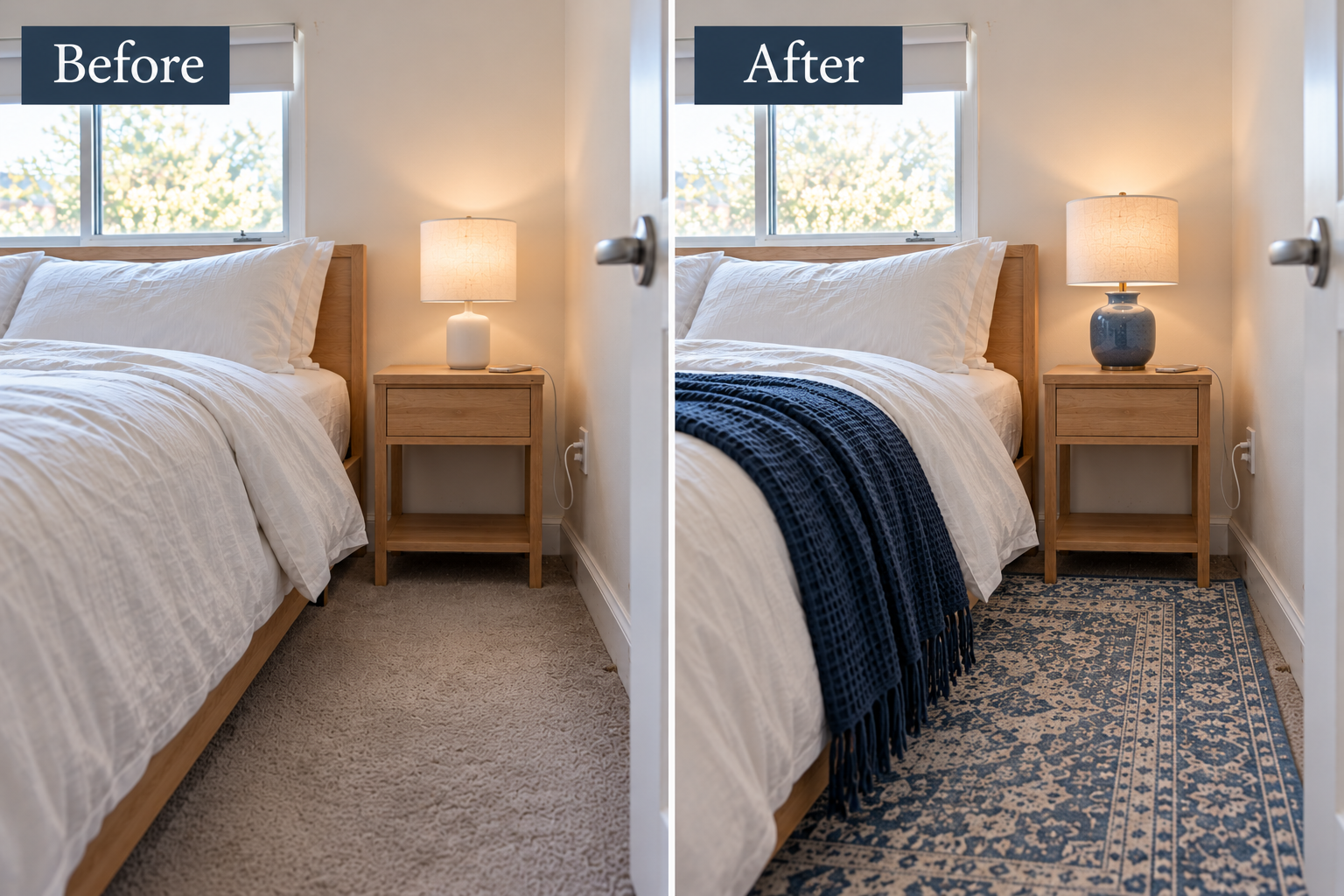
Good coastal bedroom lighting does not require pendant lights or hardwired sconces. A plug-in bedside lamp is simpler, portable and far easier to take with you. Blue lamps work particularly well when the walls and bedding are mostly neutral because they repeat the room's color without occupying much visual space.
A ceramic base can also add texture without introducing another pattern. Pay attention to proportions. In a small room, a compact lamp on a narrow bedside table usually works better than a large decorative lamp that leaves nowhere to put a book or glass of water.
If charging space is limited, a lamp with built-in USB can also reduce the number of separate items competing for the same outlet. The blue bedside lamps for small bedrooms guide focuses on plug-in table lamps, including compact options and navy pairs.
No electrician.
No wall repair later.
No reason the lamp cannot work in the next bedroom too.
7. Use a Rug to Change the Floor Without Changing the Floor
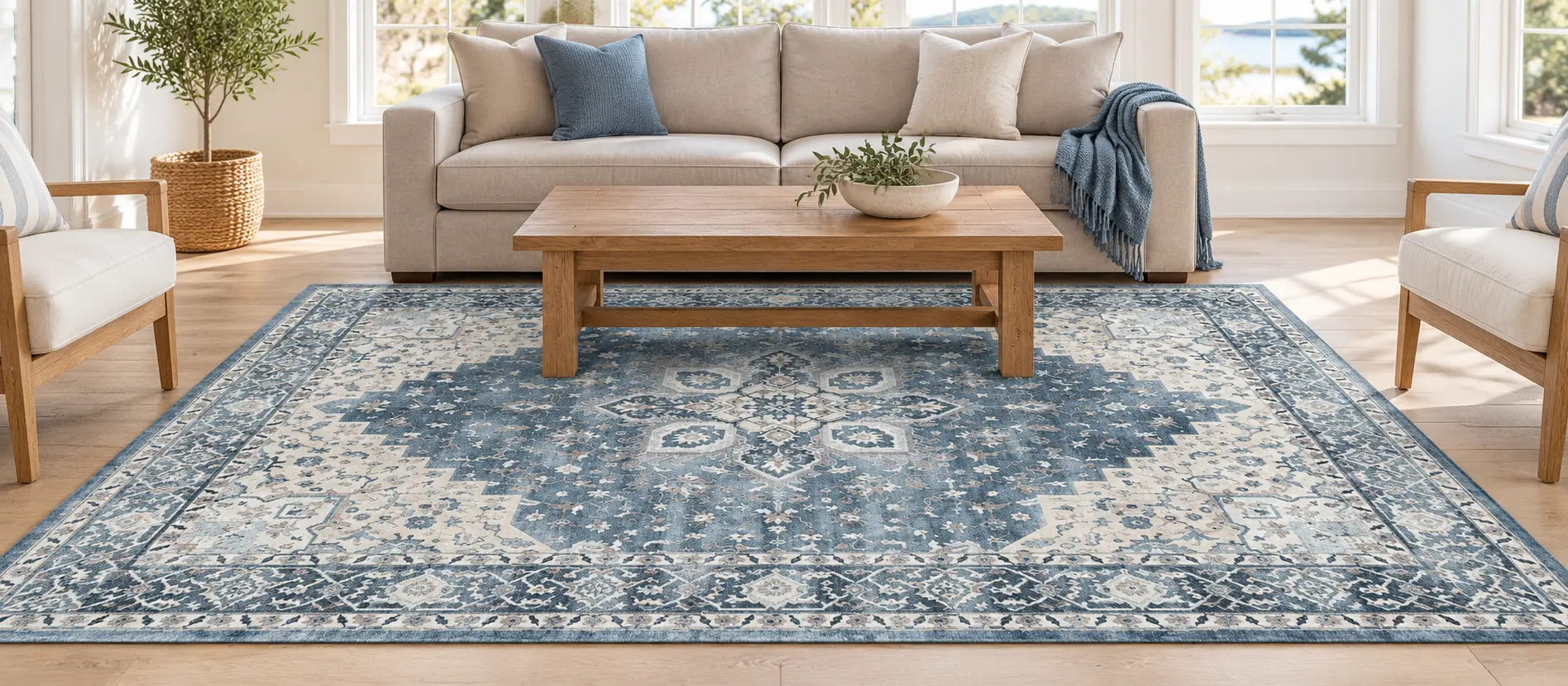
Rental flooring is often the part of the bedroom you have the least control over. A rug gives you some of that control back. It can introduce blue, soften a plain carpet or hard floor, and make the bed area feel more deliberate without touching the flooring underneath.
The key is getting the scale right.
A queen mattress is 60 inches wide, so an 8x10 rug leaves about 18 inches showing on each side. In a room only 10 feet wide, that leaves just 12 inches of bare floor beside the rug, which can feel tight. A smaller rug under the lower two thirds of the bed is easier to live with there.
The rug guide covers 8x10 only, so measure before you compare.
If an 8x10 suits the space, the washable blue rugs in vintage-style patterns guide has options that can bring in color without turning the floor into the loudest part of the room.
Follow the rug manufacturer's guidance on whether a pad or other underlay is appropriate for the specific rug and flooring beneath it.
8. Hang Coastal Wall Decor Without Making Permanent Changes
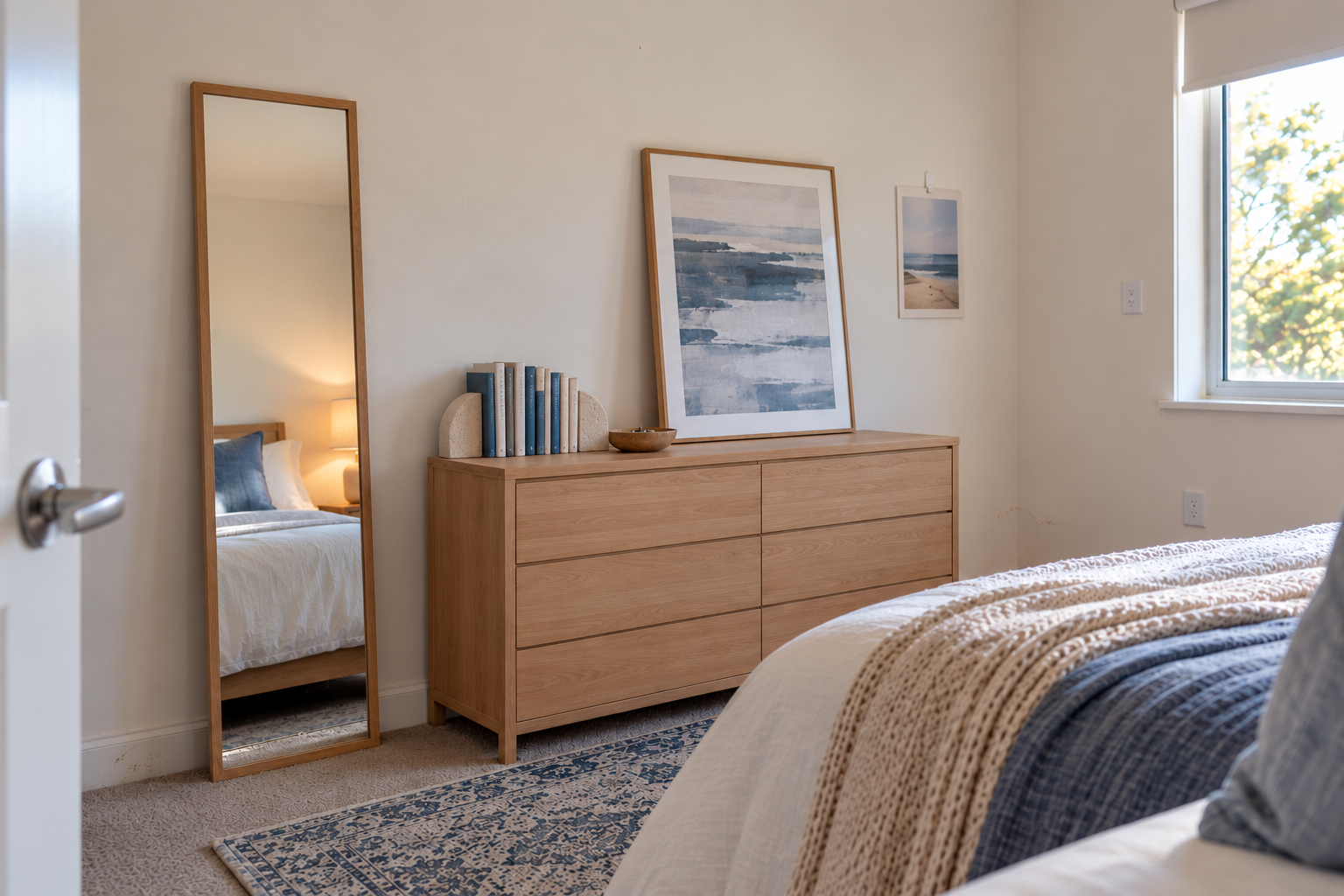
Coastal bedroom wall decor should help the room feel finished, not leave you worrying about the wall when move-out day arrives. Start with lighter pieces and fewer of them. A blue abstract print, simple horizon photograph or lightweight framed piece can bring the palette onto a plain wall without covering it in beach-themed objects.
For renters, do not assume anything sold as removable is automatically damage-free. Check your lease first. Follow the hanging product's stated surface and weight limits.
If the manufacturer recommends testing the product before wider use, try an inconspicuous spot first. Paint condition, surface type and previous wall preparation can all affect how cleanly an adhesive product comes away. Where hanging is not suitable, there are other options.
A large mirror can lean safely against a wall when the setup and room allow it. Smaller framed art can sometimes sit on a dresser or bedside surface instead of being mounted. The point is to find a solution that suits the room rather than forcing every piece onto the wall.
And keep the art restrained. One strong coastal photograph usually says more than a whole gallery of boats, shells and signs.

9. Ask One Question Before You Buy: Will It Work in the Next Bedroom?
This is the renter test that can save the most money. Before buying something specifically for the bedroom, ask: Will this still work in the next bedroom?
Imagine the next room has cream walls instead of white.
Or darker flooring.
Or less space beside the bed.
Or no place for a wide dresser.
Would you still want the piece?
Portable coastal decor earns its keep by working in more than one setting.
Bedding can change rooms.
A useful lamp can move to a guest room or desk. A rug may work in another bedroom or living area. Simple blue artwork is easier to reuse than a large piece built around a very specific beach theme.
This does not mean every purchase has to be neutral. It means the strongest pieces should depend less on the room around them. Spend more carefully on the things you expect to take with you.
Be more cautious with oversized pieces, highly specific motifs and anything that only makes sense in the exact layout you have now. A rental can still feel finished. It just should not require starting from zero when the address changes.
Make the Room Coastal, Not Permanent
The most useful coastal bedroom ideas for renters are the ones that change how the room looks without changing the room itself.
Let bedding carry the color.
Use lamps and rugs to solve practical problems.
Bring in natural texture.
Keep wall decor light.
Buy the pieces you would willingly pack again.
That gives you a bedroom that feels coastal now, without making the next move harder.
Save to Pinterest